In an era when partisan battles routinely leave Congress divided on nearly every major issue, lawmakers have managed to deliver one of Washington’s most significant bipartisan housing packages in years, approving sweeping legislation aimed at increasing America’s housing supply, expanding opportunities for homeownership, easing regulatory barriers and placing new restrictions on large institutional investors competing with ordinary families for single-family homes. What began as a heavily debated proposal moving back and forth between the House and Senate eventually became the 21st Century ROAD to Housing Act, a broad package that passed with unusually large biparti
The legislation arrives at a time when housing affordability has become one of the most persistent financial concerns facing American households. In communities across the country, potential first-time homebuyers have struggled with a combination of elevated mortgage costs, limited inventory, rising construction expenses, expensive rents and years of home-price increases that have pushed ownership beyond the reach of many working families. Younger buyers in particular have faced frustration as they attempt to save for down payments while simultaneously paying high rents and competing for a limited number of homes.
Against that backdrop, Congress increasingly found itself under pressure to demonstrate that Washington was capable of addressing the structural problems affecting housing rather than merely discussing them.
The result was legislation broad enough to attract Republicans, Democrats, banks, housing organizations, developers, advocates and numerous other groups that do not normally agree on major federal policy.
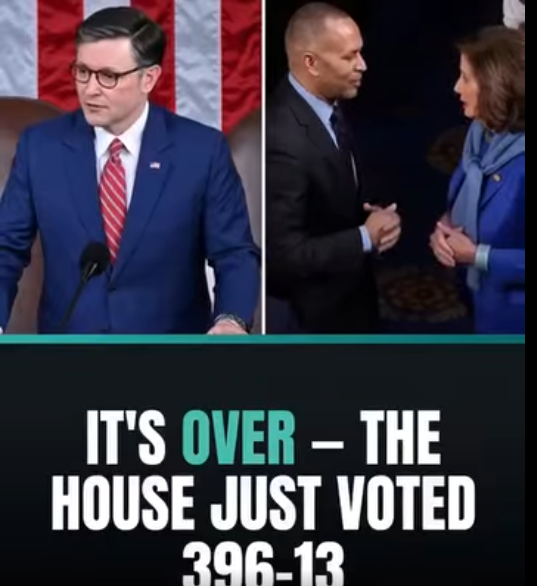
The political breakthrough became especially clear on May 20, when the House approved its amended version of the 21st Century ROAD to Housing Act by an overwhelming vote of 396 to 13. The vote represented a striking level of bipartisan agreement at a moment when narrow partisan margins are common in Washington. House Financial Services Committee Chairman French Hill, Ranking Member Maxine Waters, Housing and Insurance Subcommittee Chairman Mike Flood and Ranking Member Emanuel Cleaver were among the central lawmakers pushing the package forward.
At that point, the House legislation still differed from an earlier Senate version, meaning the enormous vote did not immediately send the bill to the president.
Instead, it launched another round of negotiations.
The House had modified portions of the Senate proposal, including controversial language involving large institutional owners of single-family homes. House negotiators rejected an approach that could have forced some existing institutional investors to sell properties after specified periods, arguing that mandatory divestiture could produce unintended consequences for renters and the housing market.
san majorities before becoming law on July 11, 2026.
That disagreement became one of the most closely watched parts of the negotiations.
The broader issue behind the dispute was straightforward and politically powerful: should companies capable of buying hundreds or thousands of houses be allowed to compete directly against individual families searching for homes?
For years, complaints have grown in some communities that large investment companies have accumulated significant portfolios of single-family houses, particularly after buying homes in bulk and converting them into rental properties.
Critics argue that when institutional investors enter neighborhoods with access to large amounts of capital, families attempting to purchase a home can find themselves competing against buyers capable of making rapid offers, buying multiple properties and operating on different financial calculations from an ordinary household.
The issue has become politically attractive across ideological lines.
Progressive Democrats have argued that housing should primarily function as shelter and a pathway to household stability rather than simply another investment vehicle for financial institutions.