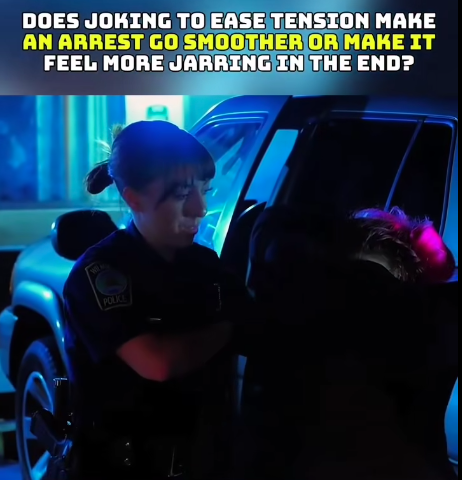
The flashing lights, the firm grip on the arm, the metallic click of handcuffs—an arrest is one of life’s most disorienting experiences. In the midst of this high-pressure moment, some officers reach for an unexpected tool: humor. A casual joke, a sarcastic comment, or a playful observation about the situation can cut through the heavy silence. But this raises a critical question: does levity genuinely grease the wheels of the arrest, or does it ultimately make the emotional whiplash worse for the person being taken into custody?
Proponents of using humor in law enforcement argue that it serves as an effective de-escalation tactic. When tensions are running high and adrenaline is pumping, a well-timed joke can momentarily break the cycle of fear and aggression. It disrupts the suspect’s fight-or-flight response, making them less likely to resist or lash out. For officers, who deal with confrontational situations daily, humor is also a coping mechanism—a way to maintain emotional distance and manage their own stress. When humor works, it can transform a hostile encounter into something almost conversational, allowing the officer to complete the arrest procedure efficiently and without physical struggle. In this sense, the joke seems to make the process smoother for everyone involved.
However, this apparent smoothness often masks a deeper psychological cost for the suspect. The fundamental problem lies in the power dynamic. The officer holds all the authority; the suspect has none. When a person in power makes a joke at the expense of someone who is vulnerable, it rarely feels like camaraderie. Instead, it can feel like mockery or condescension. For the suspect, who may be experiencing fear, shame, or disbelief, an officer’s levity can seem insensitive—a sign that their distress is being trivialized. What the officer intends as ice-breaking banter may land as a cruel reminder that their freedom is being treated lightly.
This disconnect creates a jarring cognitive dissonance. The suspect is facing a life-altering moment, yet the officer is acting as if they are sharing a casual moment. The humor sets an expectation of normalcy, only for the stark reality of the arrest to crash down moments later. The transition from laughter to the cold backseat of a patrol car can be more psychologically disorienting than a consistently stern interaction. Without the joke, the suspect’s emotional experience aligns with the gravity of the situation. With the joke, they are left confused, wondering if their trauma is a punchline. The joke may make the procedure smoother, but it often makes the experience feel more jarring.
Context and delivery matter enormously. A self-deprecating joke that humanizes the officer might be received differently than a sarcastic jab at the suspect’s misfortune. An innocent person or someone in deep emotional distress is far less likely to appreciate humor than a repeat offender who is used to the process. Officers who misread the room risk escalating resentment and damaging whatever slim trust might exist.
In conclusion, while joking may appear to make an arrest smoother on the surface, it often leaves the suspect feeling more jarred and disrespected in the end. The power imbalance inherent in an arrest makes it nearly impossible for levity to be truly mutual. Professionalism, clear communication, and empathy—without the deflection of humor—likely provide a less confusing and ultimately less painful experience for the person losing their freedom. A joke might ease the officer’s tension, but it rarely eases the suspect’s trauma.