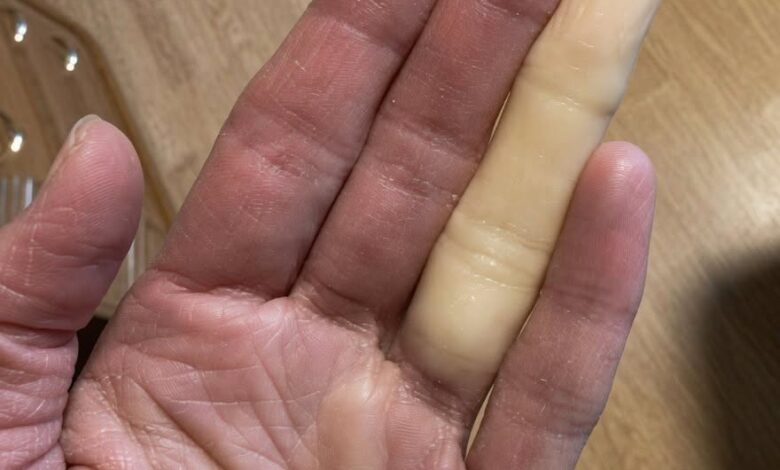
I was in my late twenties when I woke in the middle of the night and found one finger numb and white. The change was so sudden that I was frightened. I tried to move it, but it felt difficult to control. After I gently changed position and warmed my hand, the color slowly returned.
The experience led me to learn why a finger can become pale or numb during sleep. One possibility is a temporary reduction in blood flow after lying on an arm or hand. Pressure can also irritate a nerve, producing the familiar pins-and-needles sensation that appears when a sleeping limb begins to wake up.
Cold is another common trigger. Small blood vessels near the skin narrow when the body tries to conserve heat. This process, called vasoconstriction, reduces blood flow to the extremities. A finger may look unusually pale and feel cold, numb, or difficult to move until circulation returns.
Some people experience a stronger reaction known as Raynaud’s phenomenon. Cold, anxiety, or stress can cause blood flow to fingers or toes to drop temporarily. The affected skin may become white, then sometimes blue, before turning red as warmth and blood flow return. Pain, numbness, tingling, or throbbing can accompany the color changes.
A single short episode after sleeping on a hand is not the same as a diagnosis. Similar sensations can have several causes, and the pattern matters. An episode that keeps returning, lasts a long time, becomes severe, or affects daily life deserves medical attention rather than self-diagnosis.
When the finger first changes color, move away from the cold and remove any pressure from the arm or hand. Gentle movement can help once the limb is free. Warm the hand gradually with a comfortable room, warm clothing, or warm rather than hot water. Sudden extreme heat can hurt skin that is numb because it may be difficult to judge temperature.
Massage should be gentle. Hard rubbing is not necessary and can irritate painful skin. Slow opening and closing of the hand may feel more comfortable than forceful exercise. The goal is to restore warmth without causing injury.
Breathing slowly can help if anxiety is making the episode more distressing. Stress can itself trigger vessel narrowing in people prone to Raynaud’s. A calm response does not mean ignoring symptoms; it simply prevents panic from adding another strain while the hand warms.
Prevention begins with noticing the trigger. A cold bedroom may call for warmer bedding, pajamas, or gloves. Sleeping with an arm beneath the body or head can place pressure on nerves and blood vessels, so changing position may reduce repeated nighttime episodes.
Regular movement supports general circulation, and avoiding tobacco is especially important because nicotine narrows blood vessels. Some people also find that too much caffeine worsens Raynaud’s symptoms. Medication can sometimes contribute, so recurring episodes should be discussed with a clinician rather than managed by stopping a prescription independently.
Certain warning signs require more urgent attention. A finger that remains pale, blue, very painful, weak, or numb despite gradual warming may indicate more than a brief positional problem. Sudden symptoms after an injury, severe swelling, a wound, or signs of infection also need professional evaluation.
Repeated color changes accompanied by joint pain, skin rash, muscle weakness, or other new symptoms should be assessed because Raynaud’s can sometimes be associated with another health condition. People with diabetes, known circulation problems, or previous vascular disease should be especially cautious about unexplained changes in an extremity.
It helps to note how long an episode lasts, which fingers are involved, what the skin looks like, and whether cold, stress, or sleep position preceded it. A photograph taken during an episode may help a clinician understand a change that has resolved by the time of an appointment.
My own frightening moment eased as warmth and sensation returned, but it taught me not to dismiss the body’s signals. A pale, numb finger can result from temporary pressure or a normal response to cold, yet the same symptom can recur for reasons that deserve assessment.
The sensible response is gentle and observant. Remove pressure, warm the hand gradually, avoid extreme heat, and pay attention to how quickly normal color and feeling return. If the change is severe, persistent, recurrent, or accompanied by other symptoms, seek medical advice. Reassurance is most useful when it rests on the actual pattern rather than on the assumption that every pale finger means the same thing.