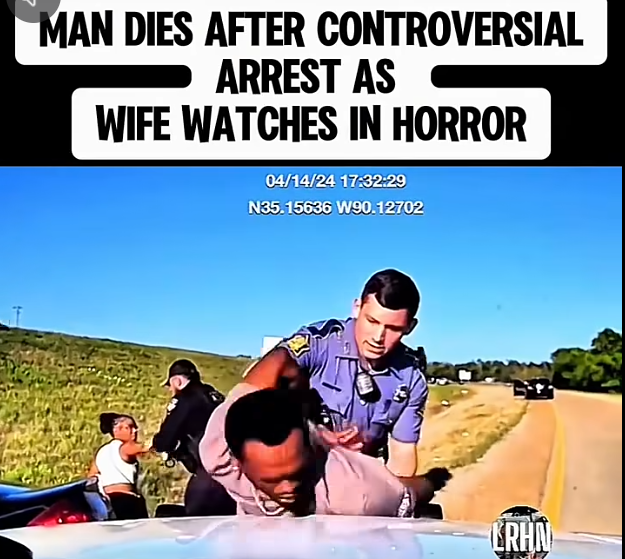
A Family’s Nightmare Unfolds
Imagine watching the person you love most in the world being restrained by police, helpless to stop what is happening, and then witnessing them stop breathing. For Nicole Lurry, this nightmare became reality when her husband, Eric Lurry, died in the backseat of a Joliet police car. Her horror would eventually lead to a $2.15 million settlement and a damning investigation that exposed systemic failures within the police department that took her husband’s life.
What Happened to Eric Lurry
In the summer of 2020, Eric Lurry was taken into custody by Joliet police officers. What should have been a routine arrest turned fatal. While handcuffed in the back of a police vehicle, Lurry died under circumstances that his family and attorneys deemed suspicious and preventable.
Nicole Lurry filed a federal lawsuit against the city of Joliet and four police officials, naming Lt. Jeremy Harrison, now-retired Sgt. Doug May, Officer Jose Tellez, and now-former Officer Andrew McCue as defendants. The legal battle lasted five years, with the city initially fighting to have the lawsuit dismissed.
The Settlement and Its Impact
In May 2026, the city of Joliet agreed to a $2,150,000 settlement to resolve Nicole Lurry’s lawsuit. The settlement included confidentiality provisions, barring either party from making disparaging remarks about the other in public statements or on social media.
But the financial settlement was only part of the story. In September 2024, the Illinois Attorney General’s Office released a 158-page report finding that the Joliet Police Department had a pattern of using excessive force against the community and that the department discriminated against Black people based on arrest, traffic stop, and use-of-force data reviews.
A Call for Accountability
The Eric Lurry tragedy prompted then-Mayor Bob O’Dekirk and several city council members to request a state investigation into the police department—a request the Attorney General’s Office granted. The findings confirmed what the Lurry family had alleged: a department with systemic problems that had cost a man his life.
A Pattern of Horror Across the Country
The Lurry case is far from isolated. Across the United States, families have watched in horror as their loved ones died during or after police encounters. In Alabama, John Daniel “LJ” Scott Jr., 39, died days after being Tasered during an arrest while suffering a mental health crisis. His body camera footage captured him screaming “I can’t breathe!” as officers struggled to restrain him.
In Texas, Xavier Hernandez, 30, died after being shocked multiple times with a Taser and pinned down by police officers for more than five minutes on Interstate 10. An autopsy ruled his death a homicide caused by asphyxia from chest compression. His mother described watching the body camera footage: “He was in pain, in crisis, and he begged, ‘Someone call 911, please.’ Instead of compassion, he was met with tasers, chokeholds, fists, and the crushing weight of officers pinning him down face-first on burning asphalt until he could no longer breathe”.
The Trauma of Witnessing
For Nicole Lurry and countless other spouses, parents, and children, the trauma of watching a loved one die at the hands of those sworn to protect is unbearable. These cases raise fundamental questions about police training, accountability, and the use of force—especially when dealing with individuals in mental health crises. As Xavier Hernandez’s mother said: “He did not deserve to die like that. No one deserves to die like that”.