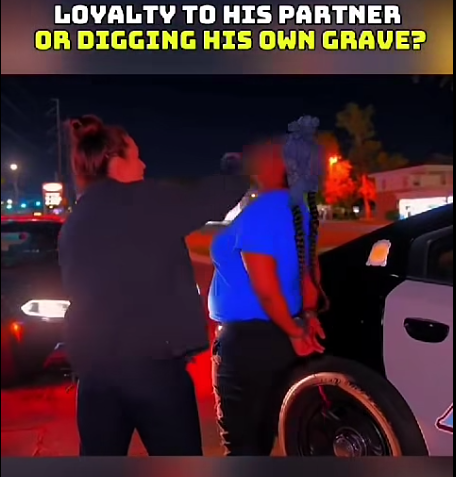
Every police officer knows the sacred code: never leave a partner behind. It is etched into the culture of law enforcement, a bond forged in the crucible of shared danger. But what happens when that loyalty becomes a liability? What happens when standing by your partner means falling on your own sword? The question haunts the corridors of every precinct: is it loyalty to his partner, or is he digging his own grave?
The concept of partner loyalty is deeply romanticized in police culture. Movies and television shows depict officers who would take a bullet for the person beside them. This is not just fiction; it is a survival instinct. When you walk into dangerous situations with another person, your life literally depends on their competence and courage. Trust is not optional; it is essential. This bond often extends beyond the job, creating friendships that endure for decades. Officers celebrate together, grieve together, and, in too many cases, lie together to protect one another from scrutiny.
But the blue wall of silence, the unwritten rule that officers do not report on each other’s misconduct, has a dark underbelly. When loyalty becomes unquestioning, it transforms from a virtue into a vice. An officer who covers up a partner’s excessive use of force, falsified report, or corrupt behavior is not being loyal; they are becoming complicit. They are trading their own integrity for a temporary shield. And when the truth inevitably emerges—as it almost always does—that shield becomes a tombstone.
The legal system treats complicity harshly. An officer who lies to protect a partner can face charges of obstruction of justice, perjury, or conspiracy. Their career, painstakingly built over years of service, can evaporate in a single moment of misplaced loyalty. They lose their badge, their pension, and their freedom. The partner they protected may walk free, but the loyal officer becomes the one serving time. In this sense, loyalty to a partner can indeed be the act of digging one’s own grave.
The emotional toll is equally devastating. Officers who compromise their ethics often suffer silently. They experience guilt, anxiety, and depression. They lie awake at night wondering if they made the right choice. They watch their partner continue on with their career while they face internal affairs investigations. The friendship that once seemed unbreakable fractures under the weight of shared secrets. Loyalty, meant to bind them together, becomes the rope that hangs them both.
But there is a line that must be drawn. Loyalty does not mean blind obedience. True loyalty to a partner means holding them accountable. It means having the difficult conversation when they cross a line. It means telling them, “I love you like a brother, but I cannot lie for you.” This is the hardest form of loyalty because it risks the relationship. But it is also the only form that preserves both honor and freedom.
Police departments are increasingly recognizing this reality. Training now emphasizes ethical courage, the willingness to do the right thing even when it is unpopular. Officers are encouraged to report misconduct, not as an act of betrayal, but as an act of professional responsibility. The culture is slowly shifting from “never rat on a partner” to “never let a partner destroy themselves.”
In the end, the choice between loyalty to a partner and digging your own grave is a false dichotomy. Genuine loyalty saves both lives; blind loyalty destroys them. The officer who truly cares for their partner will risk the temporary discomfort of confrontation to avoid the permanent destruction of a lie. Because the grave you dig for your partner is always big enough for two. The question is not whether to be loyal, but how to be loyal in a way that does not require burying yourself alongside them.